
A truck driver's working day contains more noise than the hours spent cruising with the windows closed. A busy workshop, an idling yard, a loading operation, and an unusually loud cab can add exposure that is easy to dismiss as part of the job. Hearing care works best when it becomes a practical workplace routine: identify noisy tasks, reduce avoidable exposure, use suitable protection where required, and report changes early. The aim is to protect hearing while maintaining the awareness needed to work safely around vehicles and equipment.
Look beyond the sound inside the cab
Start by noticing when the job becomes difficult to hear around. A driver may find ordinary conversation easy during a quiet break but have to raise their voice beside running equipment. That difference is useful information for a discussion with the employer. It does not establish an exposure measurement or a medical diagnosis. Keep a short note of the activity, approximate duration, location, and whether the noise has changed. Specific examples help a safety team decide what needs assessment instead of treating every complaint as general discomfort.
The OSHA overview of occupational noise exposure explains the role of exposure assessment and hearing conservation in covered workplaces. A phone app or a personal impression should not be used to declare a noisy task safe. Ask how the employer assesses the actual work, including time outside the truck. A workshop employee and a visiting driver may spend different amounts of time in the same area, so the appropriate controls need to reflect the tasks being performed rather than a job title alone.
Treat a new cab noise as a reportable change
Wind entering around a damaged seal, a loose interior panel, or a new mechanical sound can make a familiar truck unexpectedly tiring to use. Describe the change through the normal defect-reporting process. Note when it happens, whether it depends on road speed or engine operation, and which side of the cab it seems to come from. Do not turn up the audio system simply to cover it. Masking a sound does not correct the underlying condition and can make the overall listening environment louder.
Keep diagnosis and repair within the appropriate maintenance process. A driver can provide observations without removing trim near safety equipment or investigating a running engine from an unsafe position. If the change suggests an immediate mechanical or control problem, follow the carrier's procedure for stopping and obtaining assistance. Otherwise, preserve enough detail for a technician to reproduce it. A clear description is more useful than a recording made while the driver is handling a phone in moving traffic.
Reduce exposure before relying on personal protection
Where practical, spend waiting time in an approved quieter area rather than standing beside running machinery. Follow marked pedestrian routes and facility instructions, and avoid entering a maintenance bay merely to remain close to the truck. Ask where visiting drivers should wait during repairs or loading. A designated waiting room can improve both hearing conditions and separation from vehicle movements. If communication with staff is needed, establish how they will contact you rather than repeatedly walking back into a noisy work area.
Equipment maintenance, quieter work methods, and suitable separation can address noise at its source. Personal hearing protection is one part of a larger process, not a substitute for every other control. Discuss recurring noisy assignments with the employer so that the same problem is not left to each driver to improvise. If the facility requires hearing protection in a posted area, use the approved equipment and follow the instructions before entering. Keep any questions about fit or communication within that assessment process.
Choose protection for the task and the surroundings
Earplugs and earmuffs differ in fit, comfort, compatibility with other equipment, and practical use. A device that is uncomfortable or difficult to insert correctly is less likely to be used consistently. The NIOSH guidance on selecting hearing protection discusses fit and warns that excessive attenuation can reduce awareness. Ask for equipment suited to the assessed exposure and the work being done, with instruction on fitting it properly. The number printed on a package does not establish the protection achieved by an individual user.
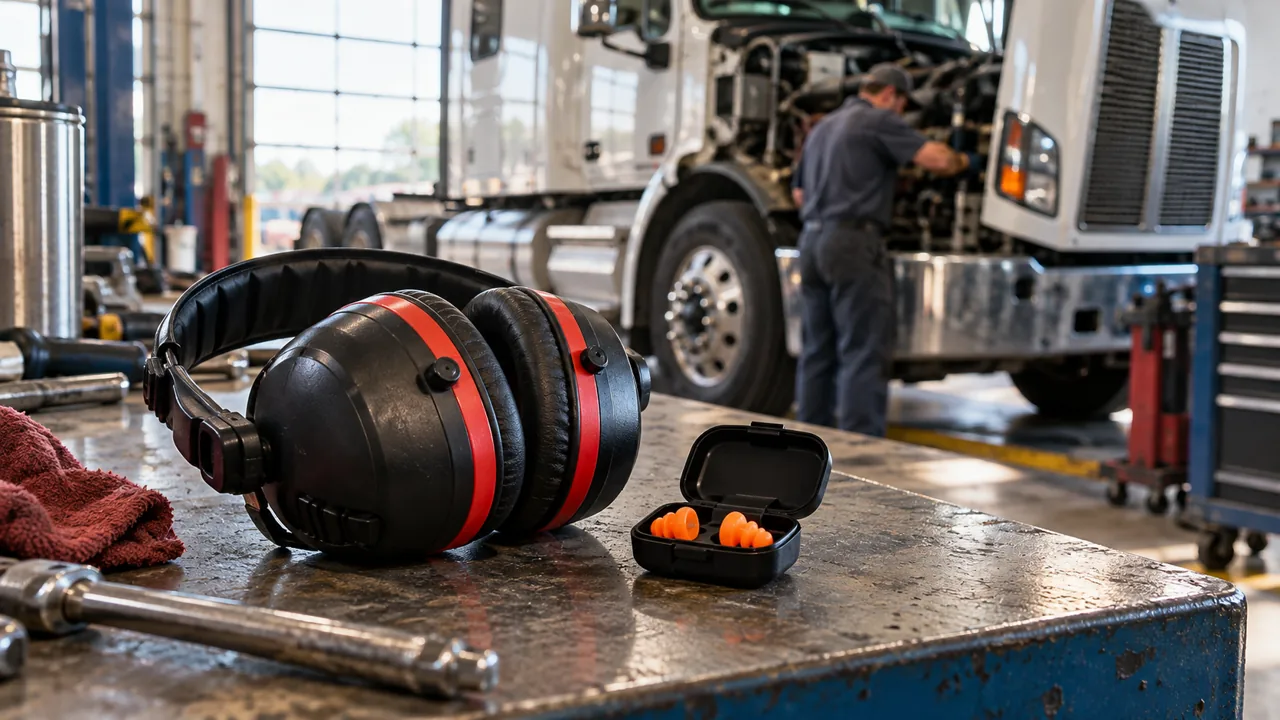
Do not assume ordinary music earbuds or consumer noise-cancelling headphones are approved hearing protectors. Do not use hearing protection while driving simply as a personal solution to an uncomfortable cab without checking applicable rules and the employer's assessment of warning-signal awareness. Protection used on foot in a maintenance area and equipment used behind the wheel involve different circumstances. The plan must preserve the ability to receive important information and work safely, rather than aiming for the greatest possible silence everywhere.
Keep communication deliberate in noisy areas
Agree how instructions will be exchanged before a task begins. A driver and technician should not have to guess whether a shouted phrase means move, wait, or stop. Use the facility's established signals and remain outside vehicle paths and pinch points. If a message is unclear, stop the interaction and clarify it from a safe position. Removing protection in a hazardous noise area merely to hear a conversation may defeat the control; a quieter discussion location can be a better solution.
Do not rely only on being able to hear a reversing alarm or approaching vehicle. Maintain visual awareness and use marked walkways, because noise can mask a warning even without hearing protection. Avoid personal calls and entertainment audio while moving through active yards. The safest communication routine is short, agreed, and supported by a clear view of the surroundings. If protection interferes with a necessary task, report that conflict so the work arrangement can be reviewed rather than quietly abandoning the equipment.
Care for the equipment you actually use
Store reusable protection in a clean case and follow its cleaning and replacement instructions. Keep earplugs away from oily pockets and dirty cab surfaces. Check earmuff cushions and headbands for wear that may affect the seal, and consider whether glasses or other equipment interfere with fit. Replace damaged items through the employer's process. A protector that was suitable when issued may no longer work as intended after prolonged use, rough storage, or changes to other protective equipment.
Build checks into a normal work routine rather than waiting for an unusually loud day. Know where spare approved equipment is available and whom to ask if the fit remains uncomfortable. If the workplace uses a hearing conservation program, take the training and any required testing seriously. Keep questions about results with the qualified professional responsible for them. Comparing personal hearing-test numbers casually with another driver is unlikely to explain the different exposures, equipment, or medical factors involved.
Notice changes and seek appropriate advice
Persistent ringing, muffled hearing, or difficulty following conversation deserves a discussion with a qualified health professional. Do not use this article to decide what caused a symptom or whether it will go away. Tell the employer about a suspected work-related exposure through the appropriate channel and describe the task clearly. Early reporting helps separate a maintenance issue, a workplace control problem, and a health concern so that each receives the right kind of attention.
A sustainable routine is straightforward: notice noisy tasks, report changes, use assessed controls, keep protection clean, and communicate safely. It does not require turning every stop into a technical noise survey. It requires treating hearing as part of everyday working conditions rather than something to consider only after a difficult shift. The same attention that helps a driver notice an unusual truck sound can also help identify avoidable noise exposure and make the next conversation with the safety or maintenance team more productive.