Back and neck discomfort can build slowly over a long-haul week. A driver may feel fine at the start of a shift and stiff after hours of sitting, backing, handling a trailer, and climbing in and out of the cab. There is no one seat setting or stretch that solves every problem. A better approach is to look at the whole workday: the position you drive in, the way you move at stops, the loads you handle, and how early you respond when discomfort starts.
The National Institute for Occupational Safety and Health (NIOSH) identifies static posture, whole-body vibration, heavy work, and bending or twisting as risk factors for low-back disorders. Its ergonomics risk-factor guide explains why changing the task and work environment matters. The suggestions below are general prevention ideas, not a diagnosis or a substitute for medical care.
Start with the seat before the truck moves
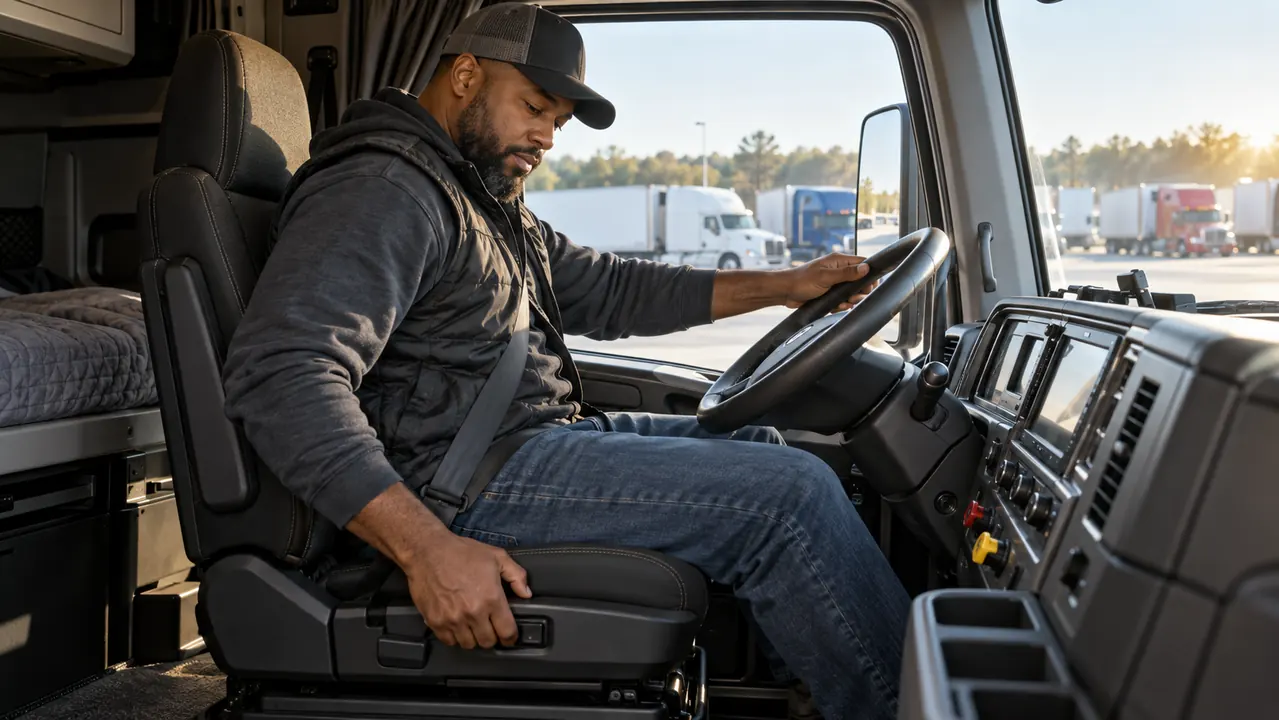
Seat adjustments are easiest when the truck is parked. Sit all the way back and adjust the seat so you can reach the pedals through their full travel without stretching or sliding forward. Your knees should remain comfortably bent, your thighs supported, and your feet able to change position. Then set the steering wheel where your shoulders can stay relaxed and your elbows have a natural bend. A steering wheel placed too far away encourages a forward head and rounded upper back for hours.
Adjust mirrors after the seat. If you move the seat but leave mirrors at the old angle, you may repeatedly lean or twist to see traffic and the trailer. Check both sides, your instrument display, and the view through the windshield while parked. Small changes matter most when they remove a posture you would otherwise repeat hundreds of times in a day. When a second driver uses the tractor, take a minute to reset everything rather than accepting someone else's position.
Use the seat's lumbar and suspension settings as intended, but do not assume more support or a stiffer ride is always better. The right setting is the one that keeps you comfortably supported while preserving control and visibility. An extra cushion should not interfere with the seat belt, pedals, or safe posture. NIOSH notes that work-related musculoskeletal problems have several contributing factors; its overview of ergonomics emphasizes fitting the work to the worker rather than relying on a single product.
Change position at safe opportunities
Remaining in one posture for an entire driving block can leave muscles feeling tight even in a well-adjusted seat. Do not stretch while the truck is moving or use a phone timer that distracts from traffic. Instead, make existing stops work harder for you. After parking, walk a short loop, stand upright, and move shoulders, hips, and ankles through comfortable ranges. At a fuel stop, a walk to the building and back can be enough to interrupt prolonged sitting.
Keep movement gentle and ordinary. A few shoulder rolls, an easy walk, and a change of position are more realistic on a busy route than a complicated routine. Avoid forcing a stretch or trying to “work through” sharp pain. A driver with an existing injury, numbness, weakness, or persistent pain should ask a qualified clinician what activities are appropriate. The goal is to maintain comfort and awareness, not to turn a truck stop into a treatment session.

Notice the little twists that add up
Not all strain happens while driving. Reaching into a sleeper from the front seat, lifting a bag from an awkward shelf, twisting to grab a phone, or carrying supplies while stepping down can repeat every day. Put the items you use most in places you can reach without leaning across the cab. Store heavy items low and secure them so they cannot shift during a hard stop. When reaching into a compartment, turn your body toward it rather than rotating only the spine.
Keep cab access points clear. Clutter around steps creates a trip hazard and may force an awkward sideways exit. Before using a grab handle, check that your hands are free enough to hold it. At a dark or icy stop, slow down and check the step surfaces. Getting down safely is worth a few extra seconds, especially after a long seated period when the legs may feel stiff.
Use the truck's entry and exit points correctly
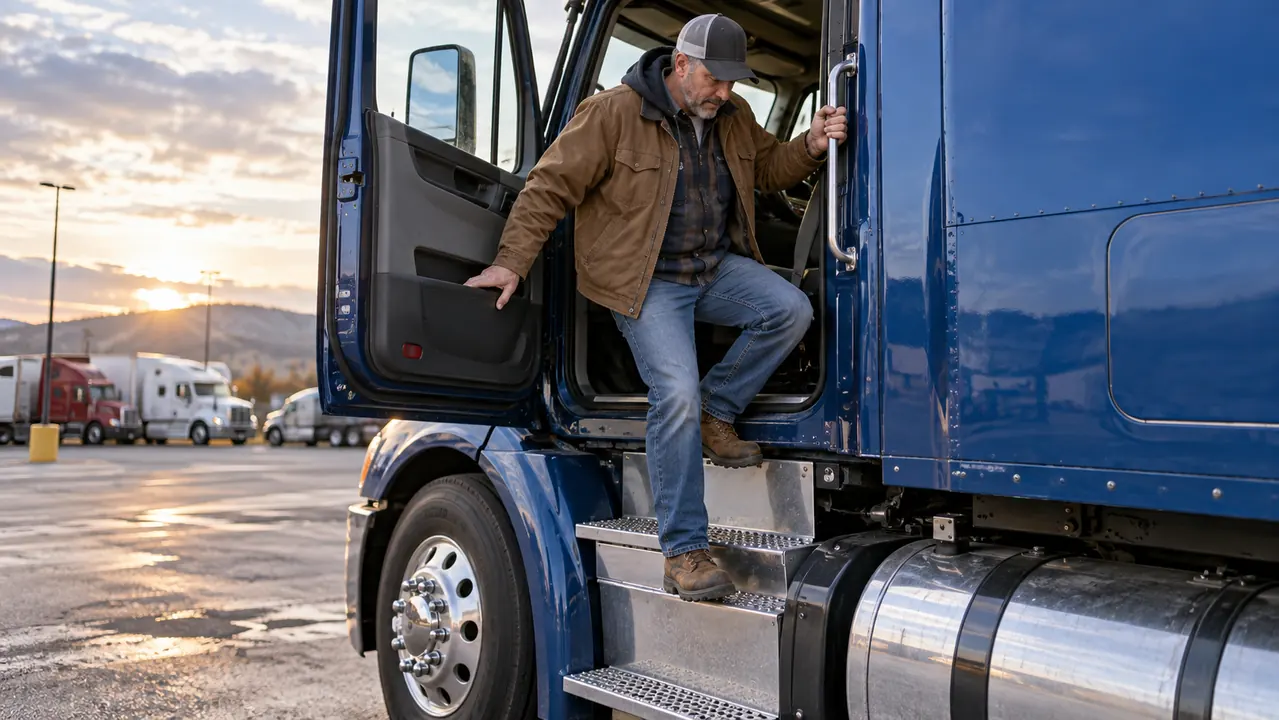
Climbing out of a high tractor cab puts a sudden demand on the legs and back. Face the cab, use the installed steps and grab handles, and maintain three points of contact when entering or exiting. Avoid jumping from the last step, even when the schedule is tight. If you need to carry a bag or paperwork, pass it down separately when practical so your hands are available for the handles. Replace worn or slippery footwear before it becomes a problem on wet steps.
Look down before the final step. The landing area may have a curb, pothole, snow, or spilled fluid that was not visible from the seat. Step to stable ground before turning toward the trailer. A safe exit also gives you a moment to notice whether you are stiff or uncomfortable before starting a physical task.
Plan physical work at the trailer
Some drivers only open doors and check seals; others move pallets, secure cargo, crank landing gear, or handle heavy equipment. The risk is different for each job. Before pulling or lifting, look at the weight, the available space, and the path you will travel. Ask for help or use appropriate equipment when the task exceeds what you can handle safely. Avoid combining a heavy lift with a turn of the torso. If a task requires repeated force, tell the carrier or facility when equipment is worn or missing instead of treating the strain as normal.
For a heavy door or landing gear, position your feet for balance and keep your hands on the intended handles. Do not yank against resistance without checking for a latch, obstruction, or mechanical fault. A stuck part can release suddenly. If a customer expects the driver to assist with freight handling that is not in the load instructions, clarify the assignment and the available equipment with dispatch first.
Watch for a pattern, not only a bad day
Discomfort that returns on one route or in one tractor may reveal a changeable factor: a worn seat, a rough suspension, long waits without an opportunity to stand, or repetitive trailer work. Note when symptoms start, what task preceded them, and whether an adjustment helps. Share equipment concerns with maintenance and work-process concerns with a supervisor. NIOSH's long-haul driver health resources show why driver health deserves attention alongside road safety.
Seek medical advice for pain that persists, worsens, or affects normal function. Urgent symptoms such as new weakness, loss of bladder or bowel control, or severe pain after an injury call for prompt medical attention. This article cannot identify the cause of any individual's symptoms. The practical lesson is to act early: report equipment problems, change an avoidable task, and get appropriate care before a small issue becomes a constant companion on the road.
A realistic pre-drive and stop checklist
- Adjust the seat, wheel, and mirrors while parked, then check pedal reach and visibility.
- Keep commonly used items close without blocking controls or exit routes.
- Use a planned fuel, meal, or parking stop to walk and change position.
- Face the cab and use the steps and grab handles rather than jumping.
- Check the weight, route, and available help before handling cargo or equipment.
- Report a worn seat, rough ride, or recurring pain instead of adapting around it indefinitely.
A long-haul driver cannot redesign every dock or make every mile smooth. The actions within reach still count. A seat that fits, a cab arranged for fewer awkward reaches, a few minutes of movement at a safe stop, and a deliberate approach to trailer work can make the workday more manageable. The best routine is one you can repeat even when the appointment changes and the road runs long.