
Healthy habits can sound like one more job on a schedule that is already full. For a long-haul truck driver, the day may start before sunrise, change with a late loading appointment, and end in a parking lot far from the food, gym, or sleep routine that works at home. That is why the most useful approach is not chasing a perfect routine. It is building a few dependable choices that fit the miles you actually run.
Wellbeing on the road supports more than comfort. Better hydration, regular meals, movement, and rest can make it easier to stay focused during a demanding drive. They also help make ordinary days feel less draining. The goal is not to overhaul everything at once. It is to notice where a small action can make the next part of the day easier.
This article offers general lifestyle information for professional drivers. It is not medical advice. Anyone dealing with ongoing pain, fatigue, anxiety, sleep problems, medication questions, or a new health concern should speak with a qualified health professional.
Start With the Real Shape of Your Day
A routine works best when it is attached to things that already happen. Instead of promising an hour that may disappear when a receiver holds you up, use the moments that are already part of the trip. Fill a water bottle when you fuel. Walk for a few minutes after a pre-trip inspection. Pack food while you are resetting the cab for the night. Make a quick plan for the next stop before you start rolling.
These small cues matter because they reduce decisions. When you are tired, hungry, or watching the clock, the easiest option often wins. If water is in reach, shoes are by the door, and a snack is already in the cooler, the better choice does not need extra willpower.
Pick one habit first. It might be drinking a full bottle of water before the first coffee, taking a five-minute walk at a safe stop, or keeping fruit and protein snacks in the cab. Keep it simple for two weeks before adding another. A routine that survives a late appointment is more valuable than a detailed plan that only works on a calm day.
Build Steadier Energy With Simple Food Planning
Road food does not have to be all-or-nothing. Truck stops and fast food may be the practical option on some days. Planning just one or two meals and a few snacks can still change how the day feels. A small cooler or insulated bag gives you choices when the nearest option is limited or when you do not have time to wait in line.
Think in combinations rather than restrictions. Pair a source of protein with fruit, vegetables, or a whole-grain option when it is available. Examples include a turkey sandwich with an apple, yogurt with nuts and berries, a salad with chicken, or leftovers packed from home. Shelf-stable options such as tuna packets, nut butter, oats, trail mix without excessive candy, and low-sugar soup can also make a useful backup kit.
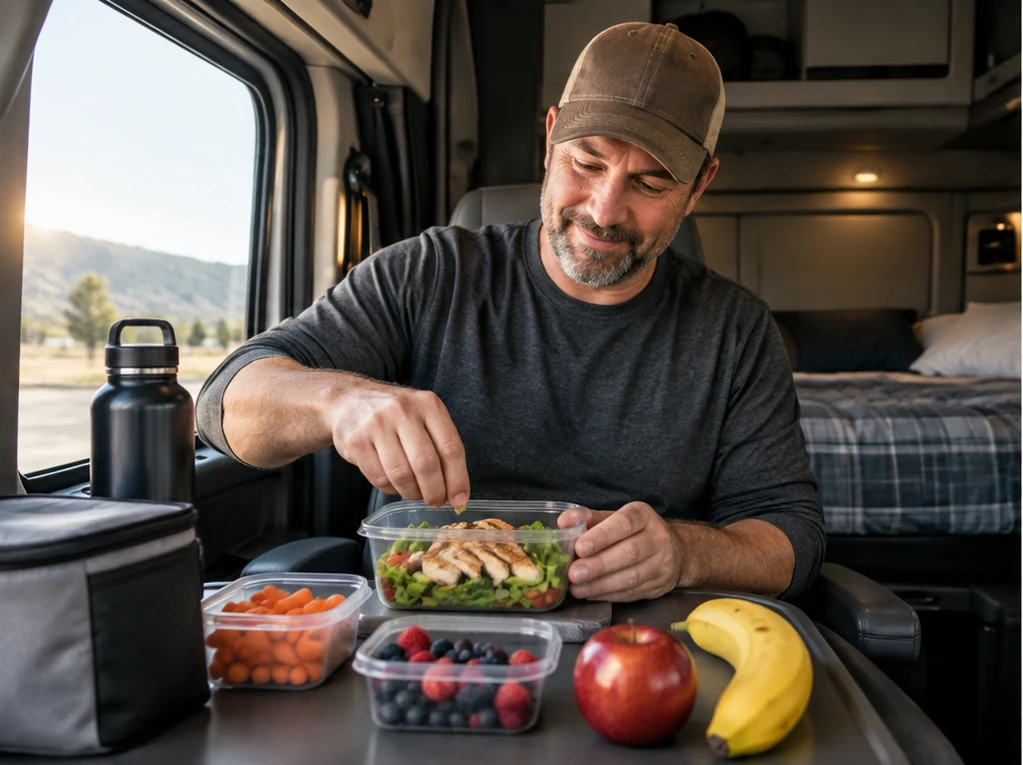
Hydration deserves its own plan. Cab heat, air conditioning, coffee, and long stretches of concentration can make it easy to overlook water. Keep a refillable bottle visible and refill it at dependable points in your route. There is no need to turn this into a contest; the practical aim is to drink regularly and notice when you are relying on sugary drinks or repeated caffeine because you have not eaten or rested well.
Caffeine can be useful, especially at the start of a shift, but it cannot replace sleep. It is often more helpful to treat it as one tool among several: water, a real meal, a brief walk, and a safe rest break. If you find yourself increasing caffeine just to get through every day, that is worth discussing with a clinician.
Use Movement as a Practical Reset
Long periods behind the wheel can leave the back, hips, shoulders, and legs feeling tight. Movement does not need to be a formal workout to help. A few minutes of walking in a safe area, gentle calf raises near the truck, shoulder rolls, or easy stretches can interrupt the stiffness that builds over a shift.
The safest time to move is when the truck is parked, the location is well lit, and you can stay aware of traffic, uneven ground, weather, and other activity around you. Avoid using a movement routine as a reason to ignore pain. Sharp pain, numbness, dizziness, shortness of breath, or symptoms that keep returning deserve professional attention.
Try linking movement to an existing stop. Walk one lap of the rest area while you are waiting for a shower, or take a five-minute stroll after you have checked the trailer and before you get back into the cab. A short, repeatable reset is usually more realistic than saving all activity for a day off.

Protect Sleep Like It Is Part of the Job
For a professional driver, sleep is a safety resource. A busy lot, daylight, unfamiliar surroundings, and a changing schedule can make it hard to protect. A simple wind-down routine gives your mind a clear signal that the workday is ending. That might mean setting your alarm and route plan, dimming the cab, changing into comfortable clothes, calling home, or reading for a few minutes before trying to sleep.
The sleeper does not need to be perfect, but small improvements can make it more supportive. Keep the space tidy enough that you can settle in quickly. Use an eye mask, earplugs, a fan, or a familiar audio routine if those help you. Think about caffeine timing as well. A late cup may feel necessary in the moment but can make the following rest period harder.
Fatigue is not a character test. If you are struggling to stay alert, treat that as information. Find a safe place to stop, follow your hours-of-service requirements and company policy, and do not try to negotiate with a body that needs rest. Repeated sleep trouble, loud snoring, or waking unrefreshed are reasons to ask a health professional for guidance.
Make Space for Mental Resets and Connection
The road can be quiet in ways that feel restorative, but it can also be isolating. A regular call or voice message with family, a check-in with another driver, a favorite podcast, or a few notes in a journal can provide a useful break from the constant operational demands of a run. These are not luxuries. They are ways to stay connected to life beyond appointments and fuel receipts.
It also helps to close out the day mentally. Before trying to rest, write down the first few tasks for tomorrow: a fuel stop, a parking target, a pickup detail, or a maintenance item to report. Putting those thoughts on paper can stop them from circling when you are trying to sleep.
Aim for Progress You Can Repeat
Some days will include a drive-through meal, poor parking, rain, delays, or a missed walk. That does not mean the routine failed. The next helpful decision is always available: refill the bottle, choose a better option at the next meal, take a few minutes outside, or settle down earlier when the schedule allows.
The strongest wellbeing plan is not the most ambitious one. It is the one you can return to after a rough day. For truck drivers, that may be a cooler with two prepared meals, a walking cue at fuel stops, a calm sleeper setup, and a commitment to respect fatigue. Those ordinary habits can support energy, comfort, and focus one mile at a time.